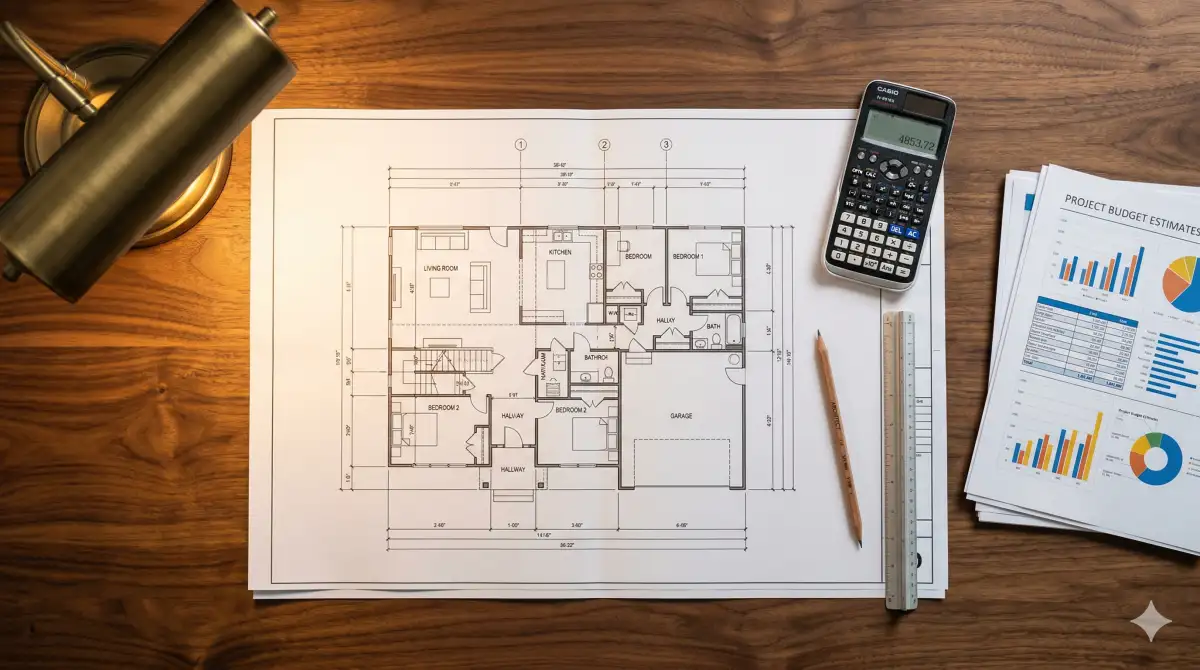
How to Qualify for a Construction Loan in 2025: Complete Step-by-Step Guide
Everything you need to know about qualifying for construction financing, including credit requirements, down payments, documentation needed, and insider tips to improve your approval odds.
Quick Overview
- Minimum credit score: 680 (720+ preferred for best rates)
- Down payment: 20-30% of total project cost
- Debt-to-income ratio: Below 43% (ideally below 36%)
- Cash reserves: 3-6 months of payments plus 10-20% contingency
- Documentation requirements are significantly more extensive than conventional mortgages
Qualifying for a construction loan is more complex than securing a traditional mortgage. Lenders view construction projects as higher risk because they're financing a property that doesn't yet exist. Understanding the requirements and preparing accordingly can significantly improve your chances of approval and help you secure better terms.
1. Credit Score Requirements
Your credit score is one of the most critical factors in construction loan approval. While minimum requirements vary by lender, here's what you can typically expect:
| Credit Score Range | Qualification Likelihood | Expected Rate Impact |
|---|---|---|
| 760+ | Excellent - Best terms available | Lowest rates (base rate) |
| 720-759 | Very Good - Strong approval odds | +0.125% to +0.25% |
| 680-719 | Good - Approved with conditions | +0.5% to +0.75% |
| Below 680 | Challenging - Limited options | +1.0% to +1.5% or denied |
How to Improve Your Credit Score Before Applying
✓ Pay Down Credit Card Balances
Aim for credit utilization below 30% on each card and below 10% overall. This can boost your score by 20-50 points within 1-2 months. Pay down highest-utilization cards first for maximum impact.
✓ Dispute Credit Report Errors
Review your credit reports from all three bureaus (Experian, Equifax, TransUnion) and dispute any errors. About 20% of credit reports contain errors that negatively impact scores.
✓ Avoid New Credit Applications
Each hard inquiry can reduce your score by 5-10 points. Stop applying for new credit 6-12 months before your construction loan application. Multiple mortgage inquiries within 45 days count as one inquiry.
✓ Keep Old Accounts Open
Length of credit history accounts for 15% of your score. Keep your oldest credit cards active with small purchases to maintain a long average account age.
2. Down Payment Requirements
Construction loans require larger down payments than conventional mortgages due to the increased risk lenders face. The down payment serves as your equity in the project and demonstrates your financial commitment.
Standard Requirements
- 20% minimum: Entry-level qualification
- 25% typical: Standard approval threshold
- 30% preferred: Best rates and terms
- 35%+ excellent: Maximum leverage with lenders
Down Payment Calculation
Down payment is calculated on total project cost, including:
- • Land purchase (if not owned)
- • Construction costs
- • Site preparation and utilities
- • Permits and fees
- • Contingency reserves
- • Financing costs during construction
💰 Land Equity Consideration
If you already own the land, some lenders will count its appraised value toward your down payment requirement. For example, if your total project costs $500,000 and you own land worth $100,000, you may only need to provide $25,000 additional cash for a 25% down payment ($125,000 total equity). However, policies vary significantly between lenders.
3. Income and Debt-to-Income Ratio
Lenders carefully analyze your income stability and debt obligations to ensure you can afford construction loan payments plus your existing debts. The debt-to-income (DTI) ratio is a key metric in this assessment.
Understanding DTI Requirements
DTI Calculation Formula
Total Monthly Debt Payments include:
- Construction loan interest-only payment
- Current mortgage or rent payment
- Auto loans
- Student loans
- Credit card minimum payments
- Personal loans
- Child support or alimony
Excellent Position
Best approval odds and most favorable terms
Acceptable Range
Approved but may face additional scrutiny
Challenging
May require significant compensating factors
Income Documentation Requirements
W-2 Employees
- • Last 2 years of W-2 forms
- • Last 2 years of federal tax returns (all pages)
- • Last 2 months of pay stubs
- • Written employment verification from employer
- • YTD earnings statement
Self-Employed Borrowers
- • Last 2 years of personal tax returns (all schedules)
- • Last 2 years of business tax returns
- • Year-to-date profit & loss statement
- • Current business balance sheet
- • Business license and documentation
- • CPA letter verifying self-employment
- • Last 2 months of business bank statements
⚠️ Self-employed borrowers face additional scrutiny. Lenders typically average 2 years of income and may add back depreciation but scrutinize for income stability trends.
4. Cash Reserves Requirements
Beyond your down payment, lenders require substantial cash reserves to cover unexpected costs and ensure you can make payments even if challenges arise during construction.
Typical Reserve Requirements
3-6 Months Payment Reserves
Liquid assets sufficient to cover 3-6 months of your maximum construction loan payment plus all other debt obligations. This demonstrates you can handle delays without defaulting.
10-20% Construction Contingency
Additional reserves equal to 10-20% of construction costs to cover overruns. While this may be included in your loan amount, having separate reserves strengthens your application.
Current Housing Costs Coverage
If you currently rent or have a mortgage, reserves to cover both your existing housing and construction payments simultaneously during the build period.
What Counts as Reserves?
✓ Acceptable Reserve Assets
- • Checking and savings accounts
- • Money market accounts
- • Stocks and bonds (70-80% of value)
- • Mutual funds (70-80% of value)
- • Retirement accounts (60% of vested balance)
- • CDs and Treasury securities
- • Proceeds from asset sales (documented)
✗ Not Counted as Reserves
- • Borrowed funds or loans
- • Unsecured credit lines
- • Non-vested retirement benefits
- • Expected inheritance
- • Future bonuses (unless documented history)
- • Cryptocurrency (most lenders)
- • Illiquid assets (art, collectibles)
5. Construction Project Documentation
Beyond your personal financial qualifications, lenders require extensive documentation about the construction project itself. This is where construction loans differ most significantly from conventional mortgages.
Required Project Documentation
📋 Architectural Plans and Specifications
Complete, professional architectural drawings including:
- Site plan showing building location, setbacks, and utilities
- Foundation plans with specifications
- Floor plans for all levels
- Exterior elevations (all sides)
- Electrical and plumbing layouts
- Structural engineering details
- Material specifications
Note: Lenders typically won't accept hand-drawn sketches. Plans must be prepared by licensed professionals and stamped where required by local regulations.
💵 Detailed Cost Breakdown
Itemized construction budget showing:
- Line-item costs for all materials
- Labor costs by trade and phase
- Subcontractor bids (3 bids preferred for major work)
- Site preparation and excavation costs
- Utility connection fees
- Permit and inspection fees
- Contingency reserves (10-20%)
- Builder's profit and overhead
🏗️ Construction Contract
Comprehensive agreement between you and the builder including:
- Total contract price and payment schedule
- Detailed scope of work
- Construction timeline with milestone dates
- Material specifications and allowances
- Change order procedures
- Warranties and guarantees
- Dispute resolution process
- Insurance requirements
🔨 Contractor Credentials
Complete documentation of contractor qualifications:
- Valid contractor's license (copy)
- Proof of general liability insurance ($1M+ typical requirement)
- Workers' compensation insurance
- Builder's risk insurance policy
- References from recent projects
- Portfolio of completed work
- Financial statements (for larger projects)
- Bonding capacity documentation
📜 Permits and Approvals
Documentation of regulatory compliance:
- Building permit (approved or in process)
- Zoning approval or variance
- Septic or sewer approval
- Well permit (if applicable)
- Environmental clearances
- HOA approvals (if applicable)
- Historic preservation approval (if in historic district)
🏞️ Land Documentation
If you own the land or are purchasing it:
- Current land appraisal (within 6-12 months)
- Deed or purchase agreement
- Title insurance policy
- Survey showing boundaries and easements
- Soil test results
- Perc test (for septic systems)
- Environmental assessments (Phase I)
6. Appraisal Requirements
Construction loans require a specialized appraisal called a "subject-to-completion" or "prospective value" appraisal. This estimates what the property will be worth once construction is complete.
How Construction Appraisals Work
The appraiser reviews your construction plans, specifications, and budget to estimate the completed home's value based on comparable sales of similar properties in the area. This projected value must typically exceed your total project cost (land + construction) by at least 10-15% to satisfy loan-to-value requirements.
Example: If your total project cost is $500,000, the appraisal should come in at $550,000-$575,000 minimum. This provides equity cushion and ensures the completed home will be worth more than you invested.
7. The Application Process Timeline
Understanding the timeline helps you plan appropriately. Construction loan applications take significantly longer than conventional mortgage applications.
Pre-Qualification (1-3 days)
Submit basic financial information for preliminary assessment. Lender reviews credit, income, and down payment capacity to determine likely approval.
Document Preparation (2-4 weeks)
Gather all required personal financial documents plus complete construction documentation. This is often the longest phase as you coordinate with architects, contractors, and various professionals.
Formal Application (1 day)
Submit completed application with all documentation. Pay application fee ($300-$500 typical) and appraisal fee ($500-$800). Lock rate if desired.
Processing and Underwriting (2-3 weeks)
Lender verifies all information, orders appraisal, reviews construction plans with internal experts, and assesses overall risk. May request additional documentation or clarifications.
Appraisal (1-2 weeks)
Appraiser reviews plans, visits site, researches comparable sales, and prepares detailed report. Prospective value must support loan amount.
Conditional Approval (1-3 days)
Underwriter issues approval with conditions that must be satisfied before closing. Common conditions include final permits, insurance binders, updated cost estimates, etc.
Clear to Close (1 week)
Satisfy all conditions and schedule closing. Final review of documents, receipt of insurance policies, and preparation of closing paperwork.
Closing (1 day)
Sign loan documents, pay closing costs and down payment, and receive initial loan proceeds. Construction can begin!
⏱️ Total Timeline: 6-10 Weeks
While some lenders advertise faster timelines, realistic expectations for construction loans are 6-10 weeks from initial application to closing. Delays in obtaining permits, scheduling appraisals, or gathering documentation can extend this timeline. Plan accordingly and don't commit to construction start dates until you have conditional approval.
8. Common Reasons for Denial and How to Avoid Them
Understanding why applications get denied helps you avoid these pitfalls:
Insufficient Cash Reserves
Many borrowers meet credit and income requirements but don't have adequate reserves beyond their down payment.
Solution: Build reserves to at least 6 months of payments plus 15% construction contingency before applying. Delay application if necessary to accumulate adequate reserves.
Inadequate or Incomplete Project Documentation
Vague plans, unrealistic budgets, or missing contractor credentials lead to immediate denials.
Solution: Invest in professional architectural plans, get detailed contractor bids, and ensure your builder has proper licensing and insurance. Don't apply until all documentation is complete.
Appraisal Comes in Too Low
If the projected home value doesn't adequately exceed your total costs, the loan-to-value ratio won't satisfy lender requirements.
Solution: Research comparable sales before designing your home. Over-building for the neighborhood or including excessive custom features can result in low appraisals. Build what the market will value.
Unrealistic Construction Timeline
Overly optimistic construction schedules raise red flags about project planning and contractor competence.
Solution: Use realistic timelines based on your contractor's actual capacity and local conditions. Most single-family homes take 8-14 months to build. Add buffer time for weather and inspection delays.
Change in Financial Circumstances During Application
Job changes, new debts, large purchases, or depleted savings during the application process can result in denial even after initial approval.
Solution: Maintain financial stability throughout the application process. Don't change jobs, make large purchases, or open new credit accounts. Consult your loan officer before any significant financial decisions.
Tips for Success
Before You Apply
- ✓ Build credit score to 720+
- ✓ Save 30% down plus 6 months reserves
- ✓ Get complete architectural plans
- ✓ Vet and select qualified contractor
- ✓ Obtain preliminary permit approval
- ✓ Research comparable home values
- ✓ Get pre-qualified with 3-5 lenders
During Application
- ✓ Respond to lender requests immediately
- ✓ Provide complete documentation upfront
- ✓ Maintain consistent communication
- ✓ Don't make major financial changes
- ✓ Keep reserves intact (don't spend)
- ✓ Update lender on any project changes
- ✓ Be patient with process timeline
Conclusion
Qualifying for a construction loan requires more preparation than obtaining a conventional mortgage, but understanding the requirements and preparing accordingly significantly improves your chances of approval. Focus on strengthening your financial profile, assembling complete project documentation, and working with experienced professionals throughout the process.
Start preparing 6-12 months before you plan to apply. Use that time to improve your credit score, build reserves, develop detailed construction plans, and vet contractors. This preparation pays off not only in better loan approval odds but also in more favorable terms and rates.
Use our Construction Loan Calculator to estimate your project costs and ensure your financing plans align with your budget. Understanding the numbers before you apply helps you present a stronger application and demonstrates financial sophistication to lenders.